Politics
Cardinal Blase Cupich on US Foreign Policy, Uplifting the Dignity of Immigrants
Three Catholic cardinals are speaking out about some of the Trump administration’s recent foreign policy actions.
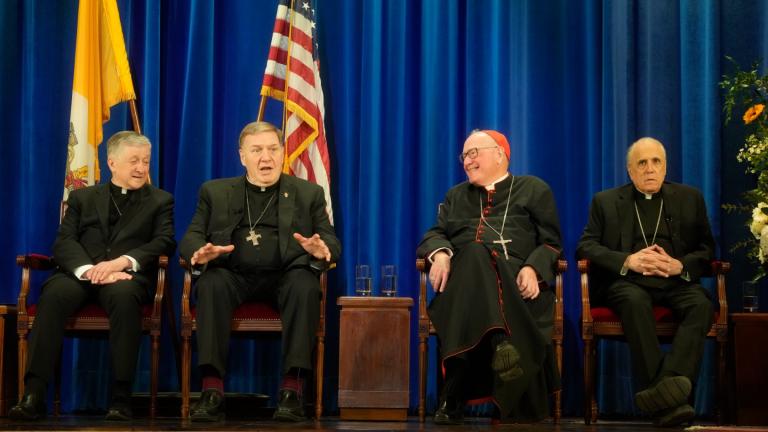
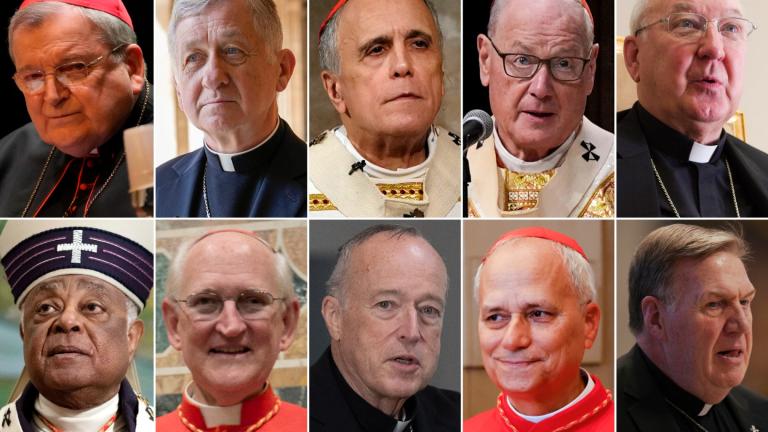
Cardinals Blase Cupich, Robert McElroy and Joseph Tobin last week released a statement questioning military action over Venezuela, Greenland and Ukraine.
It opens, “In 2026, the United States has entered into the most profound and searing debate about the moral foundation for America’s actions in the world since the end of the Cold War.”
The cardinals urged the U.S. to change its agenda on foreign policy to one that is focused on peace.
Their criticisms come on the heels of a Jan. 9 address from Pope Leo XIV to diplomats gathered in the Vatican.
“War is back in vogue and a zeal for war is spreading,” the pope said. “The principle established after the second World War, which prohibited nations from using force to violate the borders of others, has been completely undermined. Peace is no longer sought as a gift and a desirable good in itself. … Instead, peace is sought through weapons as a condition for asserting one’s own dominion.”
In their letter, the cardinals denounced war as “an instrument for narrow national interests.” They said war should be a last resort in efforts to confront evil around the world, to sustain the right to life and human dignity and to support religious liberty.
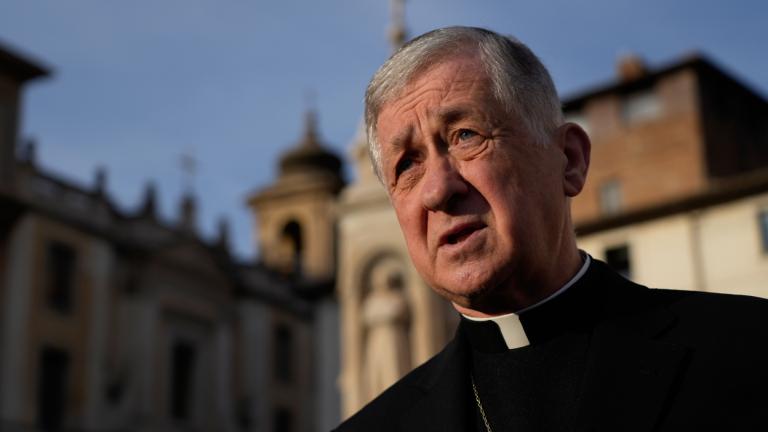
Cupich, the archbishop of Chicago, has also been vocal about the federal immigration crackdown in the U.S. He released a statement in October saying he stands with migrant communities.
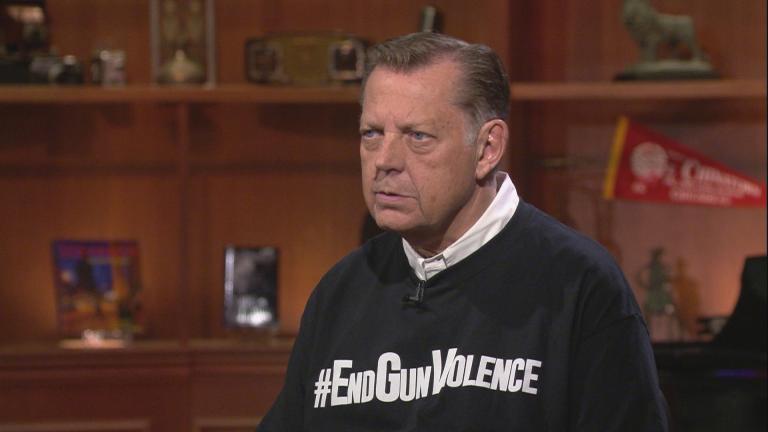
Cupich joined “Chicago Tonight” to talk about U.S. foreign policy, immigration enforcement and recent school closures.
On why he, McElroy and Tobin released their letter:
“We, in making this statement, saw that the consensus since the end of the second World War, about how nations work together, is evaporating. That is a consensus about the sovereignty of nations and their borders with Ukraine, the invasion by Russia of Ukraine, also the Venezuelan action, also how different disputes are resolved in a peaceful way, through dialogue. All of that seems to be going by the wayside, and so we wanted to make sure that we don’t lose the perspective of what is morally correct and morally the framework that should be used in having foreign policy developed.”
On deciding when it’s time to speak up:
“I think we want to make sure that included in the debate, in the national debate, is a moral framework, and we wanted to make sure, particularly, that the voice of the people whose rights are violated, where a lack of human dignity is observed, … that the voices of the poor, of the weak, are heard.”
On his concerns about rising international tensions:
“Well, much along the lines of what the pope said, where borders and sovereignty of nations is not respected, where we also have a situation in which there are disputes, as there always have been between nations, are not resolved in a peaceful way through dialogue, but rather through the use of force. And we were seeing a message that might makes right. The defense of nations, taking action simply because they can do that is really a recipe for a disaster in the world, and peace will no longer be a gift that we pursue, but rather war in order to get one’s dominion.”
On reaching parishioners who support current U.S. foreign policy:
“This (our letter) was not aimed and we didn’t name anyone in the document itself. We just wanted to make sure that when we discuss these matters, we take into consideration a moral framework. Our aim is really to engage the participation of people in the questions that we have at hand, and to make sure that when they engage them, they have the proper understanding of what is at stake whenever we don’t pay attention to a moral discipline in society.”
On the U.S. Department of Homeland Security using Bible verses in promotional materials:
“I think to describe the people who have undocumented status in our country as the wicked is totally unfair and unjust. There was a story today, coverage in the Wall Street Journal, it gave statistics of how many people are the quote, worst of the worst. 5%. The rest of the people have no criminal conviction. And so we have a situation in which people are treated inhumanely because their status is being demonized by language. So I think we have to be very careful of quoting scripture to marginalize a certain group of people and in many ways show a lack of respect for their human dignity.”
On how the Trump administration’s immigration enforcement campaign is impacting parishes:
“Well, we see a lower number of people being free to come to worship, and that’s very sad, but you list in a number of places, but also individuals because of the color of their skin. I’ve had some priests who are of a different color being targeted and arrested, stopped, because of their color, and asking them to prove that they’re citizens. That’s not America. We don’t live, we should not have to live, in a country where people have to carry around their documents all the time. And it really is troubling to have people, no matter what their status in life, stopped simply because of the color of skin.”
On recent Catholic school closures:
“First of all, it’s always a tragedy when we have to close a school, but we have a situation where demographics are running against us. We see that even in the public schools where there are closures, so the numbers just aren’t there anymore. On the other hand, we know that some of the schools have been impacted because we did not have a renewal of the tax credit scholarship program that allowed poor families to have the same choice of choosing school that best fits their children, simply because that bill was not passed and renewed. People of means have the freedom to be able to choose a school that best fits their children. Why shouldn’t poor people have that choice? And now there is a federal program that the governor can opt in on that will allow that to take place, and we hope that he signs on to that.”